Last updated: October 25, 2026
Brow lift before and after photos may show higher or more balanced brows and a less heavy-looking upper eye area, but they cannot establish what you will achieve. To see examples from our practice, visit our endoscopic brow lift before-and-after gallery; check how comparable the images are before deciding what they show.
What should brow lift before and after photos show?
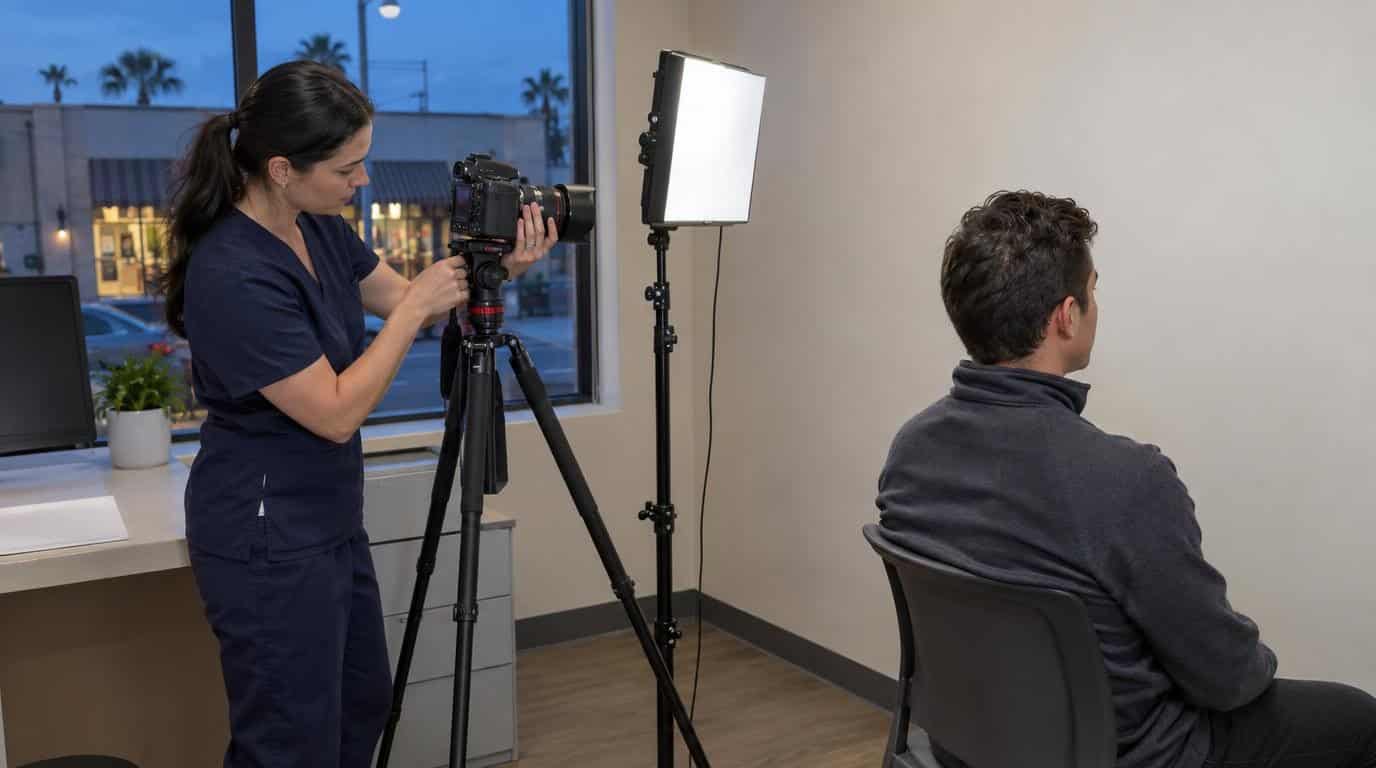
Look for front and side views that show each brow’s position, symmetry and the amount of upper-eyelid hooding. A helpful gallery includes relaxed expressions and labels identifying any additional procedures and the time since surgery.
For additional examples, see the American Society of Plastic Surgeons’ brow lift before-and-after gallery. Those photos show other surgeons’ patients, not results from Esthetica Orange County.
Which changes in brow position, symmetry and the eye area matter?
Start with the brows themselves: where do they sit relative to the eyes, and has an uneven or heavy appearance changed? Then look at the visible upper eyelid area and the person’s overall expression. A higher brow is not automatically a better result; the question is whether the change addresses the concern without making the expression look unfamiliar.
Check the procedure label before attributing every difference to a brow lift. The Cleveland Clinic’s forehead and eyebrow lift gallery, for example, identifies cases that also involved eyelid or lower-face surgery. An accompanying eyelid or midface procedure can affect what you see around the eyes and cheeks.
How do you spot differences in angle, lighting or expression?
Use the same checklist for each photo pair:
- View: Are both images taken from a similar front or side angle, with a comparable head position?
- Expression: Is the forehead relaxed in both images, rather than raised in one?
- Lighting: Could shadows make the upper eyelids look heavier in one photo?
- Styling: Do hair, makeup or brow grooming obscure the hairline or change how the brows appear?
- Labels: Are the procedures and postoperative interval identified?
If those details differ, the photos can still prompt useful questions, but they are a weaker basis for judging the change.
How can you tell whether a brow lift result looks natural?
A natural-looking brow lift result generally leaves the person recognizable, with brows that suit the face and an expression that does not look persistently surprised or tight. A still photo cannot show how the brows move during conversation. Use clearly labeled cases to explain which changes you would welcome and which would not feel like you. Gallery images reveal aesthetic style, but they do not prove that different surgeons achieve comparable outcomes.
What can a gallery tell you about the technique used?
A photo alone cannot reliably identify an endoscopic technique or show where its incisions were placed. Look for a label specifying the brow lift method and whether eyelid surgery, a facelift or midface work was performed. Our guide to endoscopic, temporal and other brow lift techniques explains why the method matters when discussing your goals.
We prefer the endoscopic approach, but other surgical methods have different targets and incision tradeoffs. A temporal lift focuses on the outer brow, with incisions in the temporal hairline. An open, or coronal, lift uses a longer incision behind the hairline and may suit more pronounced sagging. A hairline lift places an incision along the front of the hairline and may lower a high hairline, although its scar may be more visible depending on healing and hairstyle.
A 2018 systematic review of surgical and nonsurgical brow rejuvenation found that studies did not use standardized outcome measures and that randomized prospective outcome studies were lacking. Galleries from different practices should not be treated as head-to-head evidence of which technique produces better results.
When should you compare photos after an endoscopic brow lift?
Final brow lift results are generally evident at about six months, according to the American Academy of Facial Plastic and Reconstructive Surgery. Earlier photos can show progress, but swelling may still affect brow and eyelid appearance. Check when an after image was taken and whether its view matches the before image; returning to daily activities does not mean every visible effect of surgery has resolved.
How can swelling change the appearance of an early result?
Swelling can temporarily affect the contour and apparent symmetry of the brows and upper eye area. Swelling and tenderness are expected after our endoscopic brow lift; we place dressings at the incisions and advise resting with your head elevated. Many of our patients resume normal daily activities within seven days, but that does not mean swelling has fully resolved.
Bruising around the eyes can also affect an early after image, particularly when eyelid surgery was performed at the same time.
What timing details should a gallery disclose?
A useful label identifies the postoperative interval for each after image, the procedures performed and the views shown. According to the American Board of Cosmetic Surgery, swelling and bruising are most common during the first 10 days or so and are mostly resolved after about two weeks. If timing is missing, do not assume the image represents the final appearance.
Is a brow lift a surgery?
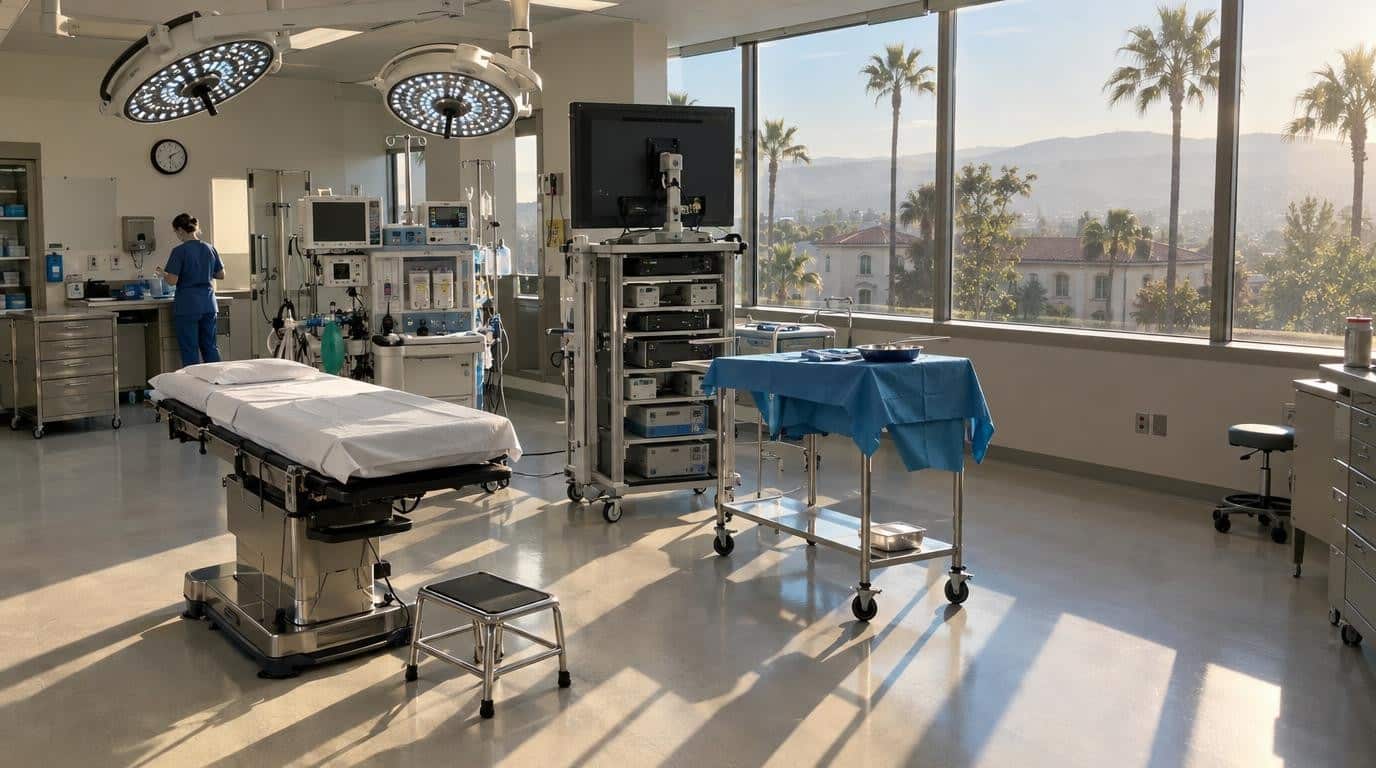
Yes. An endoscopic brow lift is surgery that repositions brow and forehead tissues through small incisions using a camera for guidance. At Esthetica Orange County, we perform the procedure with anesthesia at our accredited outpatient surgical center in Newport Beach. Incisions leave scars, even when their placement makes them less noticeable.
How does Esthetica perform an endoscopic brow lift?
We favor the endoscopic approach for brow lift surgery. Our surgeon places small incisions within the hairline, uses an endoscope to see the underlying tissues, releases and repositions tissue, smooths the skin and closes the incisions. At Esthetica Orange County, endoscopic brow lift surgery takes about one and one half hours; combining it with another procedure may change the time needed.
If midface suspension is included, the surgeon also raises cheek tissue. Changes in the cheeks in an after photo should not be attributed to brow repositioning alone.
What are the scars from an endoscopic brow lift?
Endoscopic brow lift scars are usually positioned within the hairline, where hair may help conceal them. They cannot be promised invisible. The American Academy of Facial Plastic and Reconstructive Surgery notes that scar visibility varies with healing, skin characteristics and aftercare. Ask where your incisions would sit, particularly if your hairstyle exposes the hairline.
Who is a good candidate for an endoscopic brow lift?
A potential endoscopic brow lift candidate is a healthy adult with realistic expectations whose lowered or heavy brows contribute to a tired or angry appearance. At Esthetica, that can include adults beginning to notice upper-face aging. Brow position and eyelid skin must be assessed separately before deciding whether a brow lift alone addresses the concern.
Can a brow lift help with droopy brows and hooded eyes?
When a low brow presses down toward the upper eyelid, lifting the brow may make the eye area look less heavy. Hooding can also come from excess eyelid skin, which brow repositioning does not remove. The distinction matters because similar-looking before photos can call for different plans; our guide to brow lifts and eyelid surgery for hooded eyes explains the separate concerns.
When might eyelid surgery be needed as well?
We may recommend both procedures when you have low brows and excess upper-eyelid skin. A brow lift repositions the brow and forehead, while blepharoplasty removes excess eyelid tissue. Assessing brow position before planning eyelid correction helps us judge how much eyelid skin needs to be addressed.
Can you get just a brow lift with Botox?
A Botox brow lift may create a modest, temporary change in brow position for a suitable patient, but it does not surgically reposition descended tissue. The effect comes from changing muscle activity, and a visible lift is not guaranteed. Using Botox specifically to lift the brows is off-label.
Botox carries a boxed warning that toxin effects may spread beyond the injection site and cause serious swallowing or breathing problems; seek emergency care if either occurs. Botox should not be used if you have had an allergic reaction to a botulinum toxin product or have an infection at the planned injection site.
How long does it take for eyebrows to lift after Botox?
Botox effects generally begin over several days, rather than immediately after injection. Brow position is commonly assessed at about two weeks, once the effect has had time to develop. The timing and degree of lift vary, and some patients see little or no elevation.
How does an injectable brow lift differ from surgical results?
An article on the American Society of Plastic Surgeons’ site distinguishes selective muscle relaxation from surgical repositioning of brow and forehead tissue. The American Academy of Ophthalmology says a Botox brow lift may raise the brow only a few millimeters, while surgery can raise it up to a centimeter or more; neither amount is a promised result. The options also differ in duration and recovery:
| Consideration | Surgical brow lift | Botox brow lift |
|---|---|---|
| What changes | Repositions brow and forehead tissue | Relaxes selected muscles and may subtly raise the brows |
| Duration | Lasting change, although aging continues | Temporary; desired effects last three to six months, according to the American Academy of Ophthalmology |
| Recovery | Requires incisions and surgical healing | Does not require surgical incisions or surgical recovery |
Injection placement matters: relaxing the forehead muscle that helps raise the brows can lower them instead of producing a lift.
What are the risks of an endoscopic brow lift?
Endoscopic brow lift risks include expected swelling, bruising and tenderness, as well as scars and possible bleeding, infection, anesthesia complications, altered sensation, hairline changes or unwanted asymmetry. A gallery photo cannot establish that surgery is safe for another person. Individual medical history, healing concerns and the proposed procedure need review with your own clinician.
The Mayo Clinic’s brow lift guidance notes that swelling may last many weeks and that itching or numbness can occur as incisions heal. The 2018 systematic review reported different complication profiles by technique; these were the highest rates it found for the listed outcomes:
| Technique and outcome | Highest rate reported for that outcome in the 2018 systematic review |
|---|---|
| Endoscopic brow lift — alopecia (hair loss) | 2.8% |
| Temporal or lateral brow lift — asymmetry | 1.5% |
Those figures summarize studies included in the review; they are not a prediction of an individual patient’s risk. Contact your surgical team promptly for heavy bleeding, rapidly worsening swelling, fever or other signs of infection after surgery. Seek emergency care for breathing difficulty.
Who should postpone surgery or consider another approach?
An active illness or a condition that could affect healing may call for postponing elective surgery until it is addressed; anesthesia concerns require preoperative assessment. If the main concern is excess eyelid skin rather than low brows, blepharoplasty may be more relevant than a brow lift alone. Expectations that surgery cannot meet may also call for a different plan.
What should you ask at a brow lift consultation?
Ask about the surgeon’s training and experience with your proposed technique, and look for gallery cases involving patients with concerns similar to yours. Find out how much change is realistic for your brow and eyelid anatomy, including whether an accompanying procedure contributed to a result you like.
Were the gallery cases endoscopic lifts alone or combined procedures?
Bring a short list of images you find helpful and ask:
- Which cases involved an endoscopic brow lift alone?
- Did any include eyelid surgery or midface work?
- What brow concern was the plan intended to address?
- Where would my incisions be placed, and how might my hairline affect their visibility?
How should you plan follow-up visits if you live outside Newport Beach?
If you are coming from La Mesa, plan for follow-up visits in Newport Beach when scheduling surgery. Ask our team when you will need to return for an incision check. Mayo Clinic says bandages, when used, are typically removed within one to three days of surgery.
Frequently Asked Questions
Will I need someone to drive me home after brow lift surgery?
Yes. Arrange for someone to take you home after surgery. Cleveland Clinic’s brow lift guidance notes that you cannot safely drive immediately afterward. Follow our instructions about when you may drive again.
How long do brow lift results last?
A surgical brow lift produces a lasting change, but the face continues to age. Cleveland Clinic describes the procedure as permanent while noting that results can fade as skin loses strength and elasticity and wrinkles reappear. An after photo cannot show how a particular patient’s brows will change over time.
How much time should I take off work after a brow lift?
Most people can return to work or school within 10 to 14 days, according to Cleveland Clinic. The timing depends on the procedure, your healing and the demands of your job. This is a different milestone from resuming routine daily activities.
When can I exercise after a brow lift?
Avoid strenuous exercise and heavy lifting for a few weeks after a brow lift, according to Cleveland Clinic. At Esthetica Orange County, we provide recovery instructions tailored to your procedure and healing; returning to routine tasks does not mean strenuous activity is safe yet.
When are brow lift stitches removed?
Brow lift stitches are usually removed within 7 to 10 days of surgery, according to Mayo Clinic. The timing depends on how the incisions were closed; some incisions are closed with staples instead of stitches. Do not remove either yourself.
Can a brow lift change my hairline?
It depends on the technique. A hairline brow lift can lower a high hairline. For our endoscopic lift, incisions are placed within the hairline, and hair loss is a possible complication.
Can an endoscopic brow lift be combined with a facelift?
Yes. We may combine an endoscopic brow lift with a facelift when your goals involve both the upper face and the lower face or neck. Our surgeon will assess whether combining procedures is appropriate for your health and goals.
How should you use brow lift photos to make a decision?
Use the photos to identify the brow height and shape you prefer, as well as changes you would not want. Bring examples that help you describe those preferences at your consultation.
If you are interested in a natural-looking brow lift, contact Esthetica Orange County in Newport Beach to arrange a consultation with Dr. Wael Kouli. Bring the photos and questions that matter to you so our team can discuss whether an endoscopic brow lift, another procedure or an injectable approach fits your goals.
This information is general and is not medical advice. Talk to a licensed clinician about your own situation before making a treatment decision.