Last updated: November 22, 2026
A Brazilian butt lift (BBL) is surgery that moves fat from another part of your body to your buttocks to add volume and change their shape. Despite its name, the procedure does not lift loose skin: it combines liposuction with fat grafting, without a buttock implant.
What Is BBL Surgery?
An article on the American Society of Plastic Surgeons’ website calls the procedure gluteal fat grafting, a more precise description of how it works. At Esthetica Orange County, our Brazilian butt lift pairs liposuction with fat transfer to shape both the donor areas and the buttocks.
What Does BBL Stand For in Plastic Surgery?
BBL stands for Brazilian butt lift. The name describes an appearance, not a surgical lift of the skin.
Does a Brazilian Butt Lift Actually Lift Loose Skin?
No. Added fat may make the buttocks look fuller or more lifted, but a BBL alone does not remove excess skin. If loose skin is the main concern, a traditional butt lift may better address that goal. The American Board of Cosmetic Surgery makes the same distinction between fat-transfer augmentation and surgery to address sagging skin.
How Does a Brazilian Butt Lift Work?
BBL surgery is typically outpatient. It may be performed under general anesthesia or intravenous sedation with local anesthesia, depending on the surgical plan and the patient’s health. The operation follows three steps:
- Harvest: Liposuction removes fat from suitable donor areas while contouring those areas.
- Prepare: The harvested fat is processed and purified for transfer.
- Place: Prepared fat is distributed beneath the skin to build the planned buttock shape.
Where Does the Fat for a BBL Come From?
Potential donor areas include the abdomen, flanks, lower back, and thighs. Which areas can be used depends on where a patient has transferable fat and how liposuction would affect the overall shape. Readers comparing donor-area techniques may find our guide to liposculpture versus liposuction helpful.
What Happens to the Fat Before It Is Transferred?
The removed fat is processed and purified before grafting.
Who Is a Good Candidate for BBL Surgery?
A potential BBL candidate has enough suitable donor fat and wants added buttock volume or contour. A health evaluation and realistic discussion of shape are also essential. Because recovery requires avoiding direct sitting on the buttocks for several weeks, discuss postponing a fat-transfer BBL or choosing another option if you cannot follow that restriction. Candidacy depends on the whole surgical plan, not simply on whether you want fuller buttocks.
Good skin tone in the hips and buttocks helps support the desired contour. Fat transfer adds volume but cannot remove loose skin, and the amount of fat available to harvest limits how much volume can be added.
Can You Get a BBL Without Enough Donor Fat?
If there is not enough fat to harvest, a fat-transfer BBL is not feasible. Limited donor fat may also restrict the increase in volume. Buttock implants can add volume without relying on donor fat, but they are a different operation.
What Are the Risks of BBL Surgery, and Who Should Avoid It?
BBL risks include fat embolism, blood clots (including deep vein thrombosis and pulmonary embolism), infection, bleeding, anesthesia complications, asymmetry, and loss of some grafted fat. Fat entering a blood vessel can cause a potentially fatal fat embolism; a blood clot is a distinct complication that can also travel to the lungs. The American Society of Plastic Surgeons reports a recent survey-based BBL mortality estimate of approximately 1 in 15,000 procedures; this estimate does not predict an individual patient’s risk. The most severe complications tend to arise during surgery or within hours afterward. Patients with inadequate donor fat or health conditions that increase surgical risk need an individualized assessment rather than an assumption of eligibility.
In a retrospective series of 7,000 BBL procedures using a standardized subcutaneous-only injection protocol, researchers reported seroma (a collection of fluid) in 23% of cases, anemia (low red blood cell levels) in 6.6%, and fat necrosis (death of fat tissue) in 1.9%. These are study-specific rates, not predictions for every patient.
Soreness, bruising, and swelling can occur during recovery from both liposuction and grafting. More serious complications need prompt attention. Seek urgent medical care for trouble breathing, chest pain, or fainting; contact the surgical team promptly about fever, worsening redness, drainage, or increasing pain. Discuss your personal risks with your own clinician before proceeding.
Why Does Fat Placement Depth Matter for BBL Safety?
Fat placed into the gluteal muscle can enter large blood vessels and cause a fat embolism. Subcutaneous-only placement keeps injected fat in the fatty layer above the muscle. The American Society of Plastic Surgeons identifies avoiding muscle injection as a crucial safety measure; an absence of implants does not make fat-transfer surgery risk-free.
Some surgeons use real-time ultrasound to help confirm that fat stays in the layer above the muscle. Ask what placement technique and other safety protocols your surgeon uses. For more context, read these BBL safety guidelines for patients.
What Is BBL Recovery Like?
BBL recovery involves soreness and swelling, care of the liposuction areas, and restrictions on pressure against the buttocks. At Esthetica Orange County, we advise avoiding direct sitting for the first several days and prolonged sitting during the first two weeks. We estimate full recovery can take up to six weeks. An article on the American Society of Plastic Surgeons’ website about BBL recovery advises avoiding undue or prolonged pressure on the buttocks for the first six weeks; our two-week milestone is not clearance to resume normal sitting.

Reducing pressure helps protect transferred fat while it establishes a blood supply. Our guidance recommends resting on the stomach or front of the hips for stationary activities early in recovery. A thigh-support BBL pillow shifts pressure away from the buttocks when modified sitting is permitted; it is not permission to sit without restrictions.
Our general recovery milestones are:
| Period | Esthetica Orange County guidance |
|---|---|
| First several days | Avoid sitting directly on the buttocks. |
| First two weeks | Avoid prolonged sitting and pressure that could disrupt the transferred fat. |
| Up to six weeks | Our estimate for overall recovery is up to six weeks, although sitting restrictions may continue afterward. |
Can I Sit to Poop After BBL?
Yes, brief toilet sitting is generally permitted when needed, but limit time and pressure on the buttocks and follow your surgeon’s instructions. The American Society of Plastic Surgeons’ recovery article suggests limiting any one sitting period, including toilet use, to about 10 minutes during the first six weeks. Our guidance discusses squatting over the toilet and using supports such as step-ups or an elevated seat with handles. Adequate fiber or a stool softener may help prevent prolonged straining.
When Can I Drive or Return to Work After a BBL?
Some patients may be cleared to drive or return to work around one to two weeks after surgery, depending on healing, sitting requirements, and the surgeon’s instructions. Driving requires clearance and the ability to sit in the advised position safely; a thigh-support pillow does not replace that clearance. Desk work may require a different plan from work that allows standing or movement.
How Long Do BBL Results Last?
BBL results can last many years when transferred fat establishes a blood supply and survives, although weight changes and aging can alter the buttocks’ size and contour. The volume visible immediately after surgery is not the final result: swelling changes, and some grafted fat is reabsorbed.
Before-and-after images can help illustrate possible changes, but they cannot predict an individual result. Our before-and-after photo gallery is a starting point for discussing achievable shape. The American Society of Plastic Surgeons’ buttock enhancement guidance also notes that fat-transfer results continue to develop as the body heals and that aging can change the contour later.
How Much of the Transferred Fat Survives?
There is no guaranteed survival rate for an individual BBL. At Esthetica Orange County, we estimate that about 50% of transferred fat cells will eventually be reabsorbed; your result may differ. Fat that remains and reconnects with a blood supply becomes living tissue, so the settled result may last for years.
How Is a BBL Different From Butt Implants or a Traditional Butt Lift?
A BBL, buttock implants, and a traditional butt lift address different goals:
| Procedure | What it does | Main consideration |
|---|---|---|
| BBL | Transfers your own fat to shape the buttocks and contours donor areas with liposuction. | Requires adequate donor fat; does not remove loose skin. |
| Buttock implants | Add volume with implants rather than transferred fat. | Does not require donor fat; does not remove loose skin. |
| Traditional butt lift | Removes excess skin and reshapes sagging tissue. | Addresses loose skin rather than serving as fat-transfer augmentation. |
If both added volume and removal of loose skin are goals, neither a BBL nor implants alone addresses both. Our overview of body-reshaping options offers broader context.
Frequently Asked Questions
How long does BBL surgery take?
A Brazilian butt lift typically takes 2 to 4 hours, according to the American Board of Cosmetic Surgery. The areas treated and your surgical plan determine your actual time in surgery.
When can I sit normally after a BBL?
The American Board of Cosmetic Surgery says normal sitting is typically allowed after about eight weeks. Wait for your surgeon’s clearance before resuming it; the timing depends on your recovery.
How should I sleep after a BBL?
Sleep on your stomach or side rather than directly on your buttocks during early recovery. The American Board of Cosmetic Surgery recommends avoiding lying directly on the buttocks for about two weeks and waiting for your surgeon’s clearance before changing positions.
When can I start walking after a BBL?
Most patients can expect to be up and walking a day or two after a BBL, according to an article on the American Society of Plastic Surgeons’ website. Walking is different from resuming exercise or prolonged sitting. Follow your surgeon’s activity instructions, especially if soreness or other health concerns affect your recovery.
Do I need a compression garment after a BBL?
A compression garment is commonly used over areas treated with liposuction after a BBL. The American Society of Plastic Surgeons’ recovery article recommends wearing it for eight weeks and notes that it may leave the buttocks uncovered to avoid compressing the fat grafts. Follow the garment instructions provided for your operation.
When will I see my final BBL results?
Final fat-transfer results can take up to a year to appear, according to the American Society of Plastic Surgeons. The shape you see soon after surgery is not a reliable measure of your settled result.
Can a BBL be reversed?
A BBL may be reversible, but removing transferred fat is not always straightforward. An article on the American Society of Plastic Surgeons’ website notes that buttock liposuction can leave loose skin and that fat placed in the gluteal muscle cannot be safely removed. Options depend on fat placement, skin elasticity, and the result you want.
What Should You Ask at a BBL Consultation?
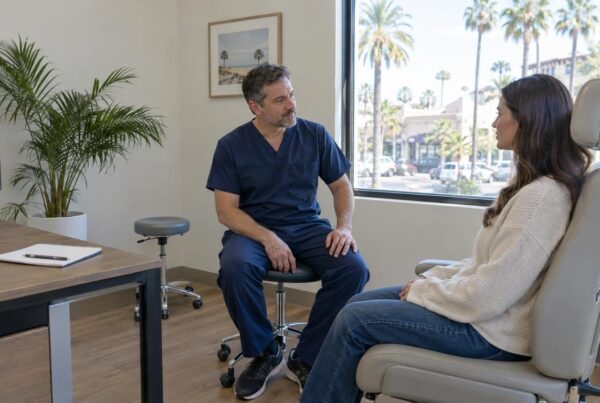
Ask whether you have enough donor fat, what shape fat transfer could realistically create, and how the surgeon keeps fat placement above the muscle. Ask about anesthesia, recovery restrictions, support for everyday activities, and why your final result might differ from an early photograph. Clear answers help you weigh the procedure against other approaches.
- Which donor areas could be used, and how might liposuction change their shape?
- Would fat transfer address my goal, or is loose skin the main concern?
- What relevant training and BBL experience does the operating surgeon have, and what fat-placement technique and safety practices will they use?
- How should I plan for toilet use, driving, work, and sitting restrictions?
- What changes in graft survival or body weight could affect my result?
If you are considering a BBL, contact Esthetica Orange County to discuss an in-person consultation in Newport Beach, San Diego, Del Mar, or Coronado, California, or an offered virtual consultation. Dr. Wael Kouli, a cosmetic surgeon and diplomate of the American Board of Cosmetic Surgery, can help you assess your anatomy and options without promising candidacy or a particular result. Call (949) 721-1113 to reach our team.
This information is general and is not medical advice. Talk to a licensed clinician about your own situation before making a treatment decision.
About the doctor at Esthetica Orange County
Dr. Wael Kouli – Cosmetic surgeon, diplomate of the American Board of Cosmetic Surgery.