Last updated: November 11, 2026
Ear pinning before and after photos can show ears that sit closer to the head and look more balanced, but the change varies with each person’s anatomy and healing. The most useful comparison considers ear shape, symmetry, photo angles and when the pictures were taken – not just how far the ears project.
What Does Ear Pinning Before and After Typically Show?
Ear pinning before and after images typically show less prominent outer ears with a more balanced shape, not ears pressed flat against the head.
What Is Otoplasty, or Ear Pinning Surgery?
Ear pinning is a form of otoplasty that reshapes or repositions the visible outer ear. At Esthetica Orange County, our otoplasty surgery is intended to reduce unwanted prominence while preserving natural contours. Otoplasty does not affect hearing.
How Much Closer to the Head Can Prominent Ears Sit After Surgery?
The 2026 practical review of otoplasty techniques and outcomes found an average mastoid-to-helical rim distance of 27.1 mm before surgery and 15.4 mm after surgery, measured from the bone behind the ear to its outer edge. The review included 18 studies involving 1,590 patients and 3,060 ears. It also reported favorable outcomes for cartilage-sparing techniques and certain cartilage-fixation sutures.
Those are averages across the studies, not the distance every patient should expect. A natural-looking result depends on the ear’s starting shape, its folds and its balance with the other ear; bringing an ear as close to the head as possible is not the goal.
How Can You Compare Ear Pinning Before-and-After Photos Fairly?
Compare ear pinning photos taken from similar angles, with similar head positions, lighting and stages of healing. Look at the outer ear’s contours and the balance between ears as well as their projection. Our gallery shows individual patient results; no photograph can promise the same change for someone with different anatomy.
Which Photo Angles and Time Points Make Comparisons Useful?
Compare matched front views for overall balance, side views for projection and, where available, rear views for how the ears sit against the head. Check when each after photo was taken: an early image may still show swelling, while a later one may show a more settled contour. Consistent lighting and head position also make differences easier to judge. You can use our otoplasty before-and-after gallery to examine these details.
What Should You Look for Beyond How Close the Ears Sit?
Notice whether the outer rims and inner folds retain a natural shape. Consider how prominent or asymmetrical the ears were before surgery, since a case with a different starting point may not be a useful model for your goals. The same attention to photo conditions and starting anatomy applies when evaluating brow-lift before-and-after photos.
How Does Otoplasty Change Ear Shape and Position?
In ear pinning, a surgeon reshapes or repositions outer-ear cartilage and typically uses sutures to hold the new contour closer to the head. Prominent ears may result from an underdeveloped inner fold, a large conchal bowl or both. These differences affect which parts of the outer ear need correction.
How Do Cartilage-Sparing and Cartilage-Cutting Techniques Differ?
Cartilage-sparing techniques primarily shape the ear with sutures while preserving cartilage; cartilage-cutting techniques cut or remove cartilage to help create a new contour. Cartilage-sparing does not mean incision-free or nonsurgical. Neither method is best for every ear; the technique depends on which contours need correction.
At Esthetica Orange County, the approach depends on the correction needed. Our otoplasty procedure generally takes 1.5 to 2 hours, although an individual surgical plan may differ.
Where Are Otoplasty Incisions Usually Placed?
An incision may be placed behind the ear or within an inner crease, where its position can help conceal the resulting scar. Through the incision, the surgeon may remove excess skin or cartilage, fold the cartilage and hold its new shape with internal stitches.
Who Might Be a Good Candidate for Ear Pinning?
Adults concerned about prominent, droopy or asymmetrical ears may be candidates for an otoplasty assessment. Good candidates are physically healthy and have realistic expectations about improving balance rather than creating perfectly identical ears. An examination helps determine which features can change and whether treating one ear or both would produce a balanced appearance. Because ear pinning is elective, choosing no surgery is also an option. If ear size or shape concerns you more than projection, you can discuss whether a different form of otoplasty might address your goal.
What Should You Do If You Have Concerns About a Child’s Ears?
Children’s ears continue to develop as they grow. If you have concerns about a child’s ears, speak with their pediatrician or family doctor about whether an evaluation is appropriate.
Can Just One Protruding Ear Be Treated?
It is possible to treat one ear, but otoplasty is usually performed on both ears—even when only one protrudes—to improve symmetry. The starting shapes and positions of both ears affect what balance is achievable. For more on adult concerns, see our guide to otoplasty for adults with protruding ears.
How Long Does It Take to Recover from Having Your Ears Pinned Back?
Most people fully recover in four to six weeks after ear pinning, according to Cleveland Clinic’s ear-pinning guidance. Cleveland Clinic’s broader otoplasty guidance notes that recovery can take up to eight weeks. Adults may return to desk work sooner, while our contact-sport restriction extends beyond the usual recovery period to protect the ears.
When Can Adults Return to Work?
At Esthetica Orange County, adults can usually return to work within a few days, depending on how they feel and what their work involves. Returning to a desk does not mean the ears are fully healed. Plan time for your follow-up visit and ask about any job duties that could put pressure on the ears.
How Long Are Bandages, a Headband, and Activity Limits Needed?
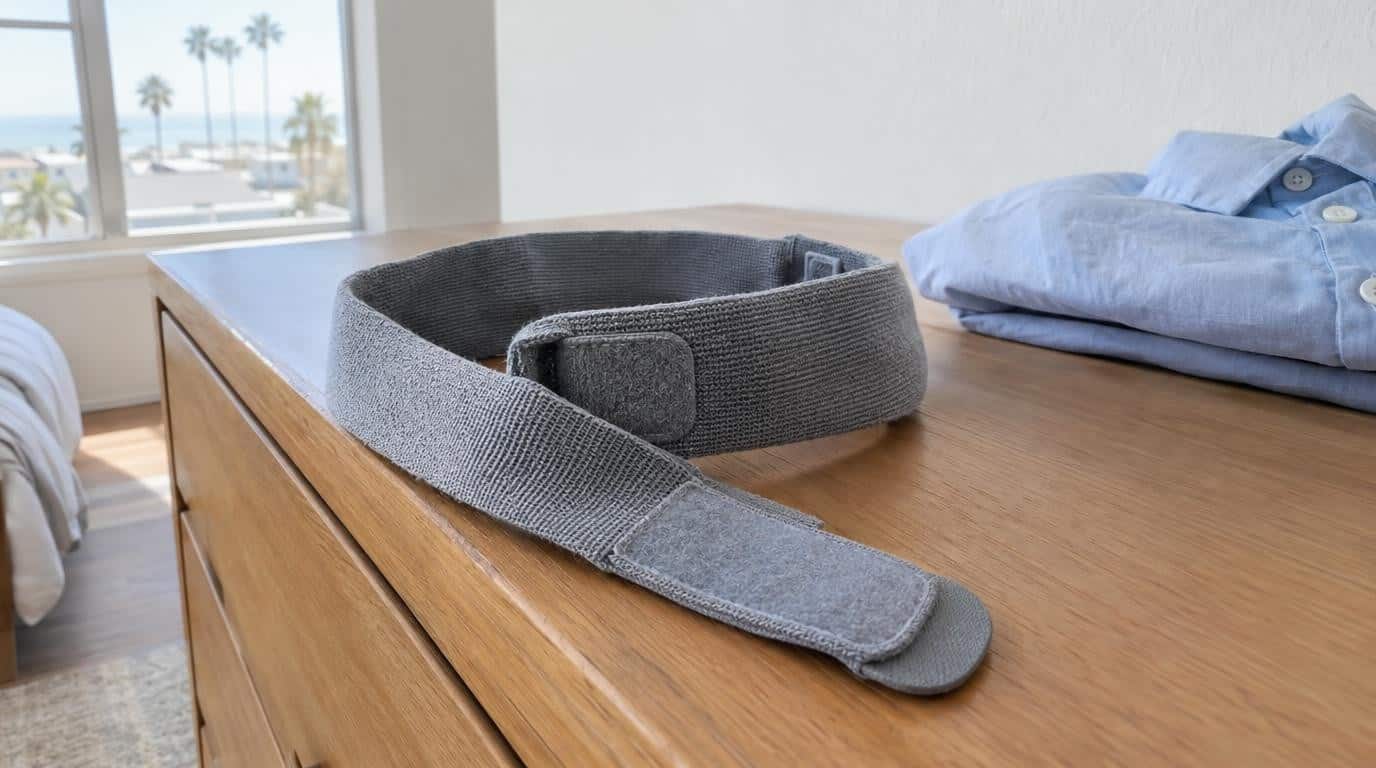
At Esthetica Orange County, we generally remove bandages after a few days, may recommend a nighttime headband for 2 to 6 weeks, and advise avoiding contact sports and other activities that risk injuring an ear for at least two months.
- Keep protective bandages in place until our team removes them, and avoid side-sleeping or pressure on the ears.
- Stitches generally dissolve or are removed within a week; follow our instructions rather than pulling at them.
- Wear the headband as directed to protect your ears during sleep.
- Ask when you can resume exercise that does not put your ears at risk.
Follow your individual instructions for bathing and other exercise. For practical planning, read this educational ear pinning recovery guide.
How Long Do Ear Pinning Results Last?
Ear pinning results are intended to last a lifetime, although some correction can be lost over time. The difference is visible when bandages come off, but early swelling can obscure the healed contour. A photograph taken immediately after surgery cannot establish the final appearance or lifelong stability.
What Is the Failure Rate of Otoplasty?
The 2026 practical review of otoplasty techniques and outcomes reported a 2.8% pooled recurrence rate and a 2.1% pooled revision rate, with a mean follow-up of 24.5 months. The American Board of Cosmetic Surgery’s otoplasty guidance gives a broader recurrence range of about 2% to 10%, depending on technique. Recurrence means some loss of correction; revision means another procedure. Neither rate captures every complication or predicts an individual patient’s long-term outcome, so neither is a universal “failure rate.”
When Can You Better Judge the Final Appearance?
At 3 months and beyond, you can better judge the ear contour, although minor swelling may continue to resolve and the final shape may keep refining, according to the American Board of Cosmetic Surgery. Compare later photos with earlier ones taken at similar angles rather than treating the change visible at bandage removal as the finished result.
What Are the Risks of Otoplasty, and Who Should Postpone It?
Short-term aching, redness and swelling are common after otoplasty. Complications are uncommon but can occur. Possible problems include a reaction to dressings or sutures, blood collecting around the ear cartilage, asymmetry, changes in sensation and raised scars. Medical history, smoking and medications can affect suitability, making an honest preoperative discussion essential.
Which Side Effects or Complications Should Patients Discuss?
Discuss previous reactions to dressings, antiseptics or sutures, along with concerns about scarring or unequal ear shape. Cleveland Clinic’s otoplasty guidance also identifies bleeding around ear cartilage, infection, numbness and scarring as possible complications. Contact the surgical team promptly for worsening pain, rapidly increasing swelling or signs of infection; seek urgent medical care for severe symptoms or trouble breathing.
When Might Surgery Not Be Appropriate Yet?
Someone who is not medically cleared for surgery or whose desired result is not realistic may need to postpone a decision. Tell your own clinician about health conditions, smoking, allergies and every medication or supplement you take. At Esthetica Orange County, we instruct patients who smoke to avoid smoking for at least two weeks before surgery. Review blood-thinning medicines, nonsteroidal anti-inflammatory drugs, vitamins and supplements with our surgical team. Do not stop a prescribed medicine based on general advice: your clinician should give instructions specific to your health and surgical plan.
Frequently Asked Questions
At what age can a child have ear pinning surgery?
According to the American Board of Cosmetic Surgery, ear cartilage nears adult size around age 5, but age alone does not determine whether—or when—surgery is appropriate for an individual child.
What type of anesthesia is used for ear pinning in adults?
Adults may have ear pinning under local anesthesia with sedation or under general anesthesia. At Esthetica Orange County, we typically use local anesthesia with sedation for adults, but the choice depends on the surgical plan and the patient’s health.
Can I go home the same day after ear pinning?
Yes. Ear pinning is usually an outpatient procedure, and most patients go home the same day after spending a few hours in recovery. You should be alert, breathing well and stable before leaving. Arrange for someone else to drive you home after sedation or general anesthesia.
When can I wear glasses or earrings after ear pinning?
Wait until your surgeon clears you to wear glasses or earrings after ear pinning. Cleveland Clinic advises avoiding both during recovery until your surgeon says they are safe. Frames, earring backs and accidental snags can put pressure on healing ears.
What can be done if an ear starts sticking out again after otoplasty?
Early splinting by the surgical team can sometimes address minor relapse, while larger recurrences may require touch-up sutures. Revision is generally delayed for at least 3 months, or until your surgeon clears you, to avoid disturbing healing cartilage and scar tissue.
Can stitches used in ear pinning come through the skin?
Yes. A stitch can work its way through the skin after otoplasty, a complication called suture extrusion. The 2026 practical review discussed above reported suture extrusion in 5.4% of cases, making it the most common complication reported in that review. That figure is not an individual prediction. Contact your surgical team if you notice an exposed stitch.
Will ear pinning make my ears smaller?
Ear pinning primarily reduces how far the ears project; it does not necessarily reduce their size. Other otoplasty techniques can address ear size or shape, depending on the concern.
How Can You Discuss Your Ear Pinning Goals at a Consultation?
A useful otoplasty consultation connects the look you prefer with the shape and position of your own ears. Bring examples of natural-looking results, ask which gallery cases have similar starting anatomy, and discuss possible asymmetry, surgical technique and recovery needs. The aim is a realistic plan, not a promise to reproduce someone else’s photo.
What Questions Should You Bring About Photos, Technique, and Recovery?
- Which gallery cases most closely resemble my ears before surgery, and when were their after photos taken?
- Which contours or differences between my ears could be changed, and which may remain?
- Would you recommend assessing correction of one ear or both, and why?
- Which technique and incision placement suit my anatomy?
- What are my instructions for bandages, sleeping, work, exercise and follow-up?
Dr. Wael Kouli can examine whether ear projection, cartilage folds or asymmetry are driving your concern and discuss an appropriate plan. Esthetica Orange County offers consultations in Coronado and Newport Beach; our team can confirm your consultation location and where surgery would take place. If you are considering ear pinning, contact Esthetica Orange County to arrange an otoplasty consultation with Dr. Kouli.
This information is general and is not medical advice. Talk to a licensed clinician about your own situation before making a treatment decision.